The Sounds Of The Humpback Whales
Maya Gallery, Tel Aviv, Curator: Meital Aviram
The Sounds Of The Humpback Whales (B-side) (2022)
single-channel video, digital HD format, 10:53 min
Original music: Tai Rona | Cinematography: Shiraz Grinbaum, Asaf Einy, Michal Chitayat | Performers: Gon biran, Hila Gluskinos, Tamar Rosenzweig
The work was supported by the culture council of Mifal Hapais, culture bureau of Tel Aviv-Jaffa municipality and Yehoshua Rabinovich Foundation of the Arts

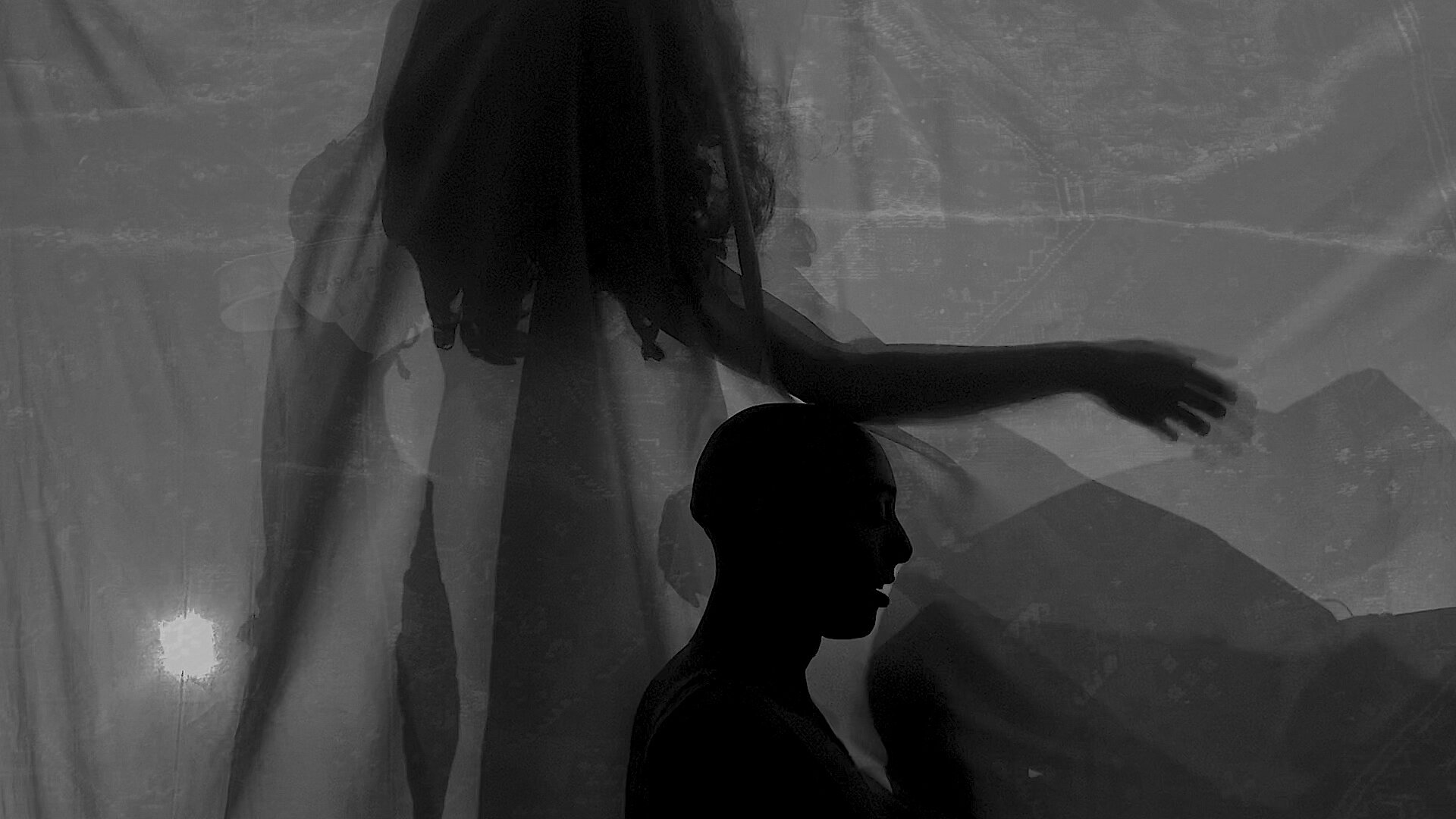
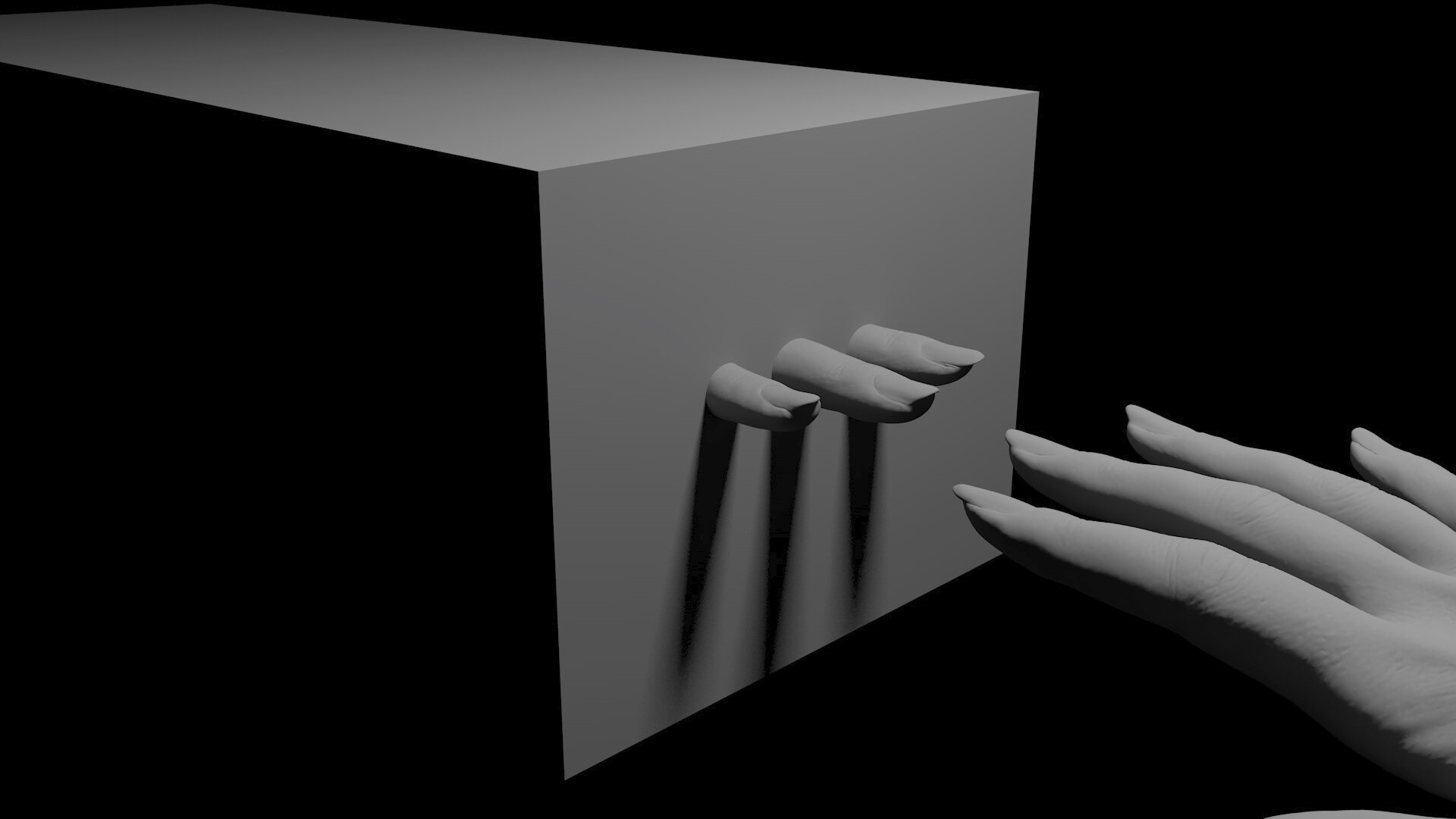
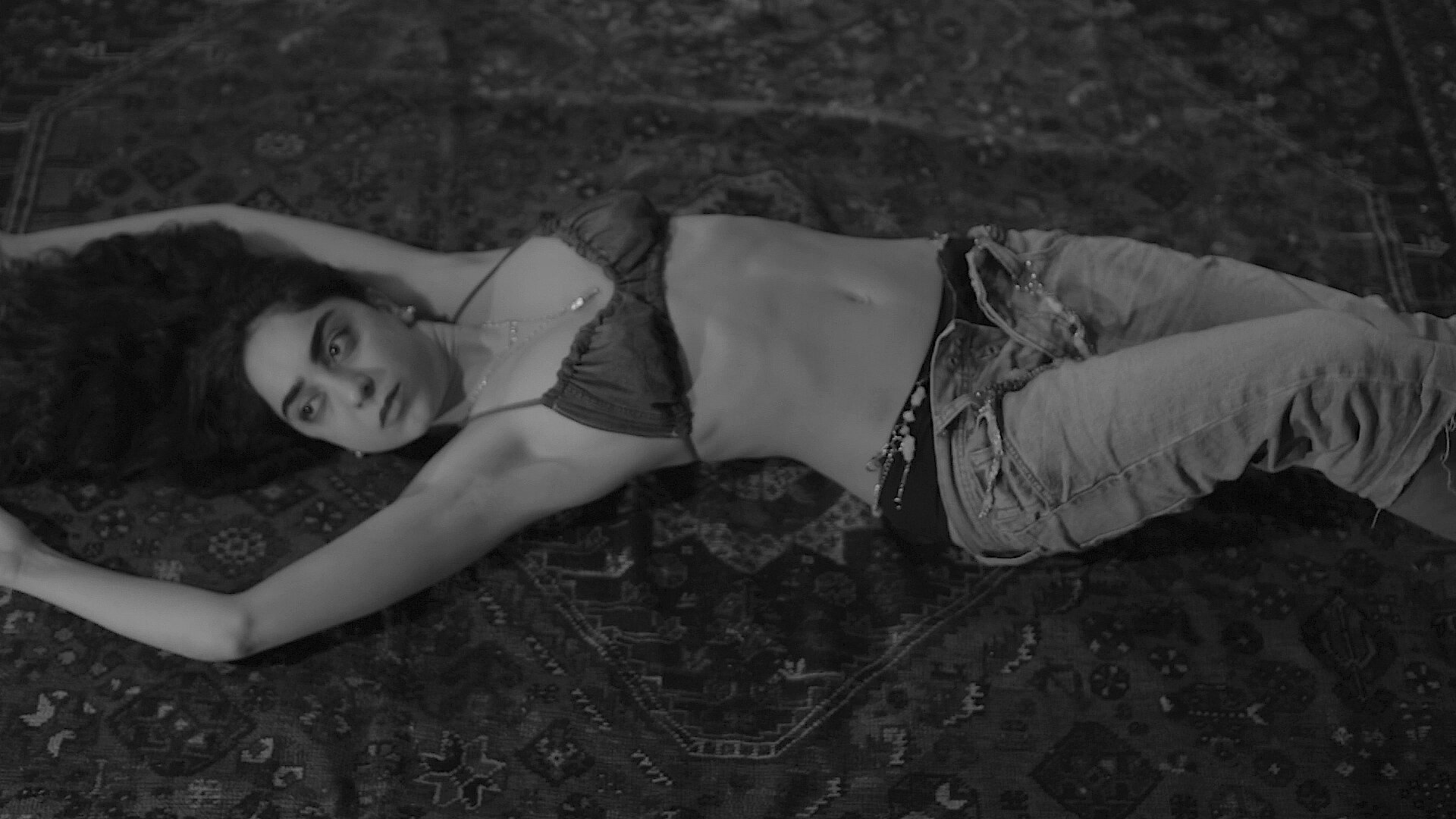
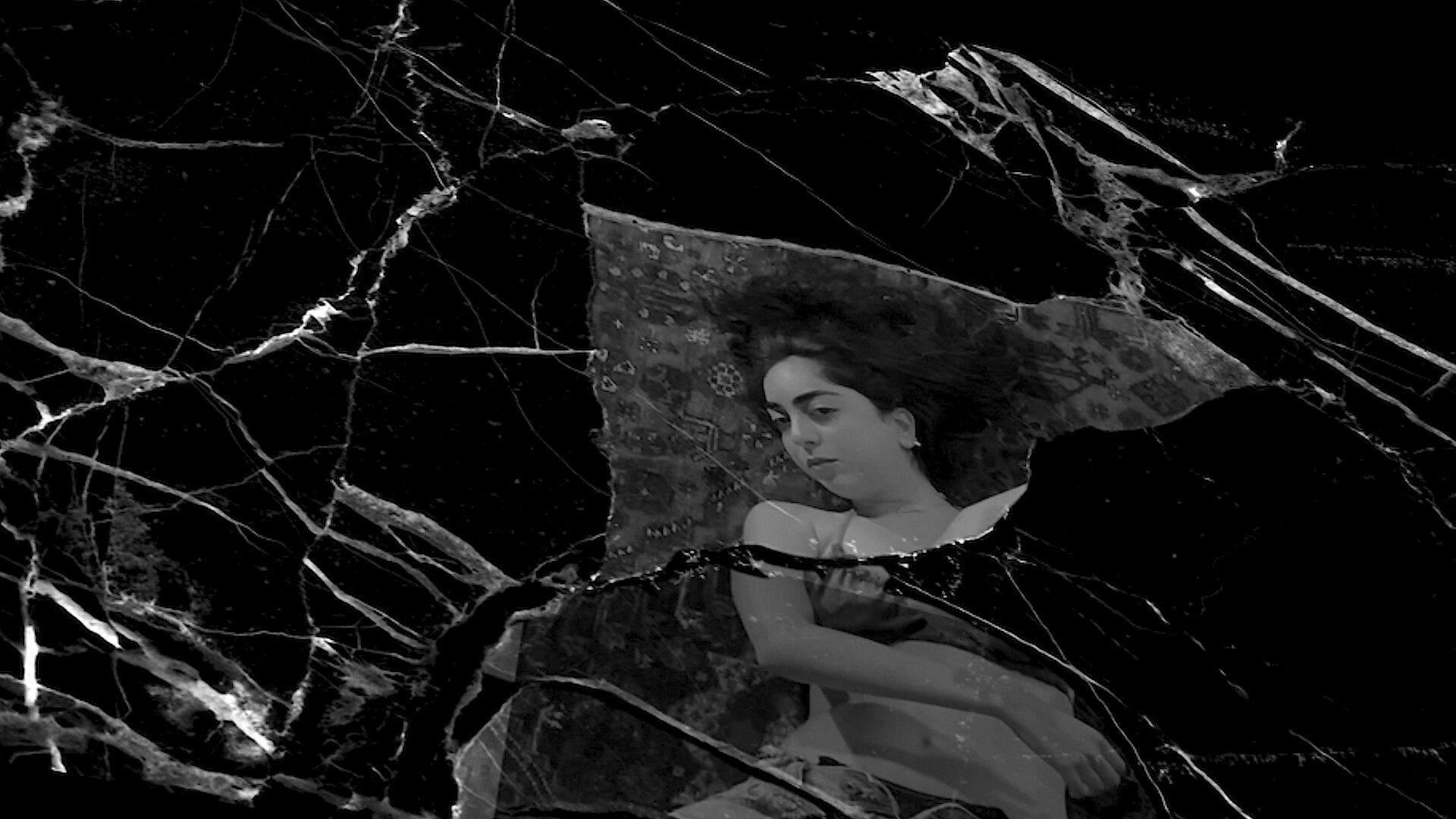
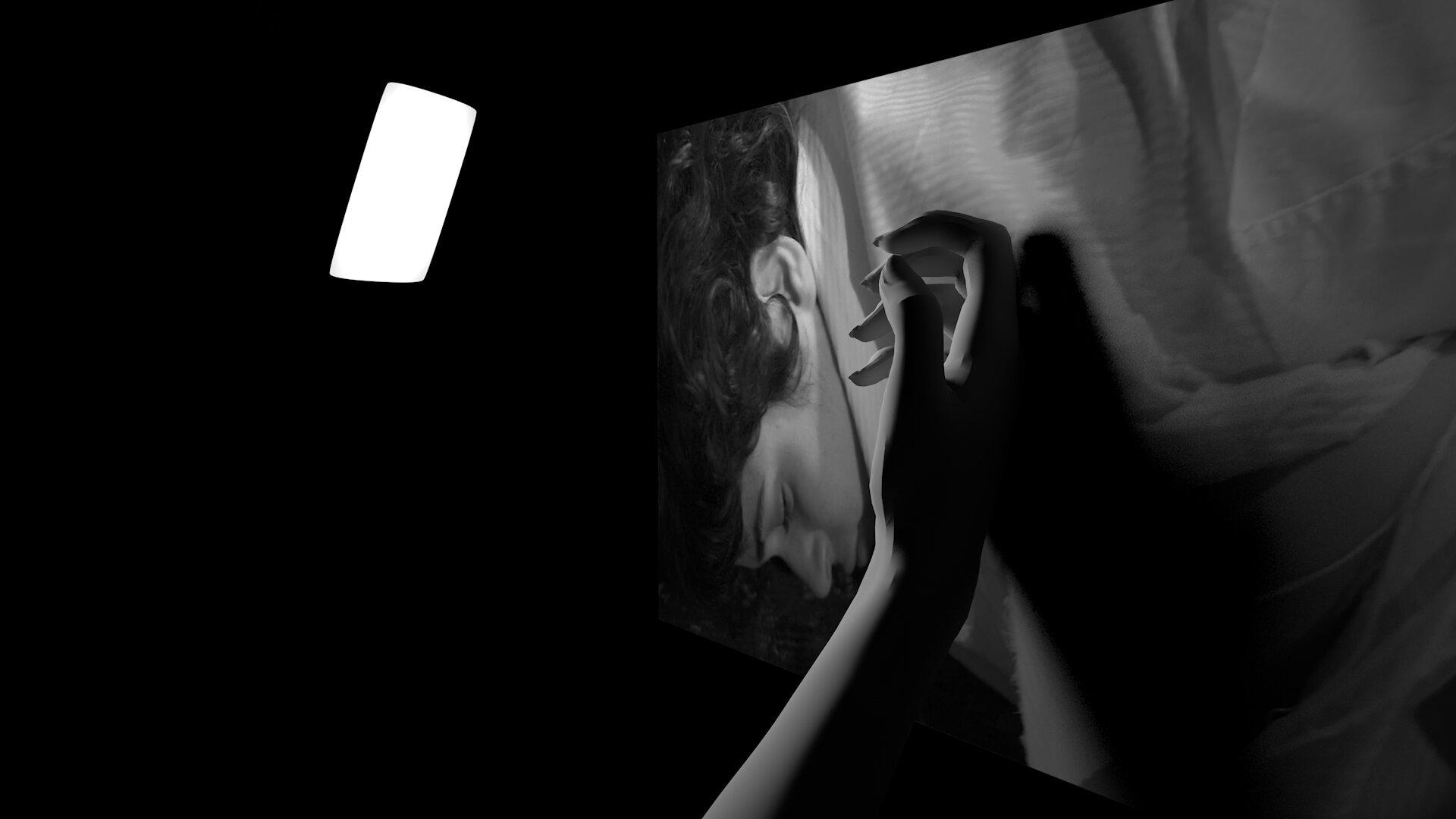
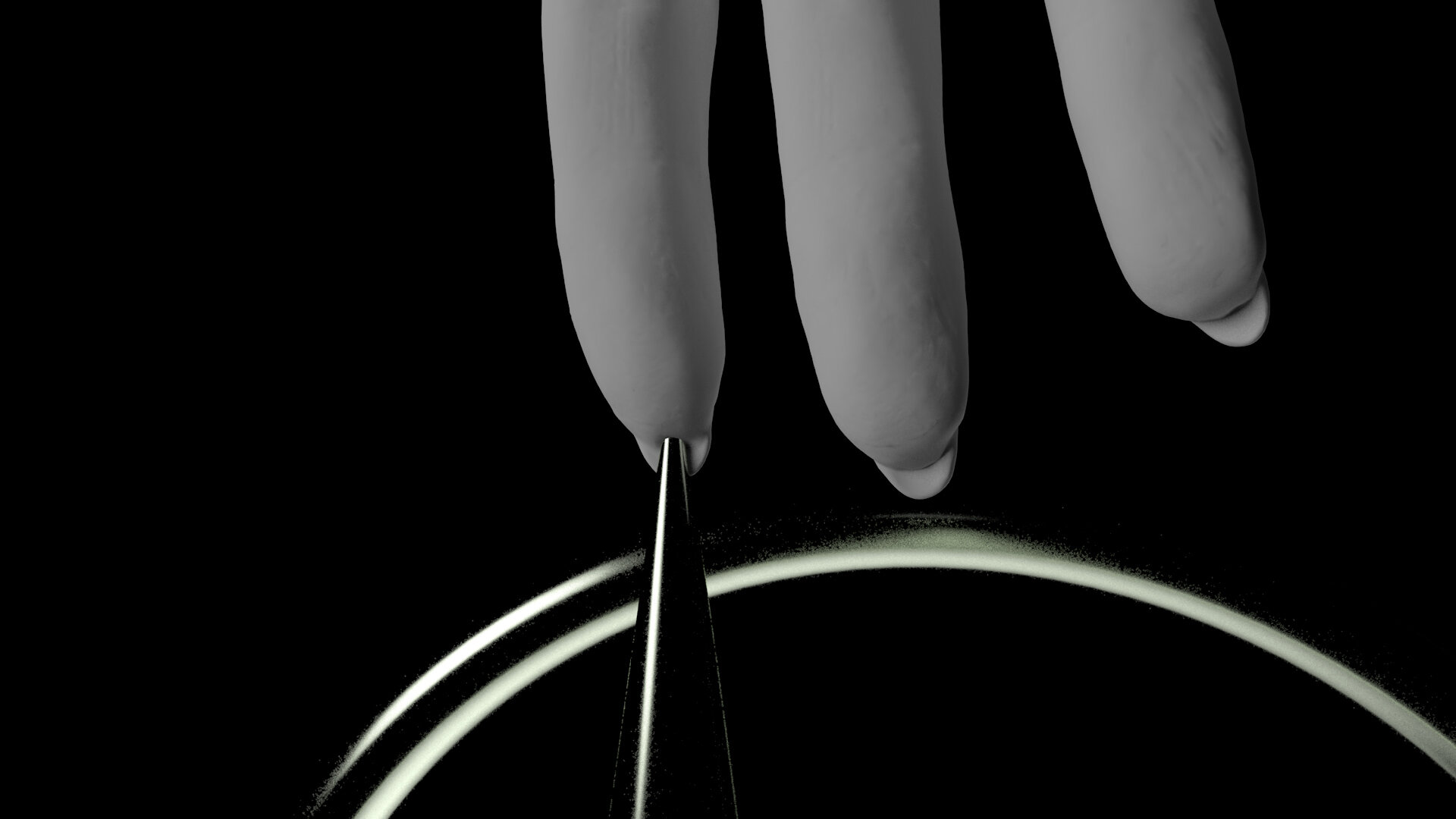
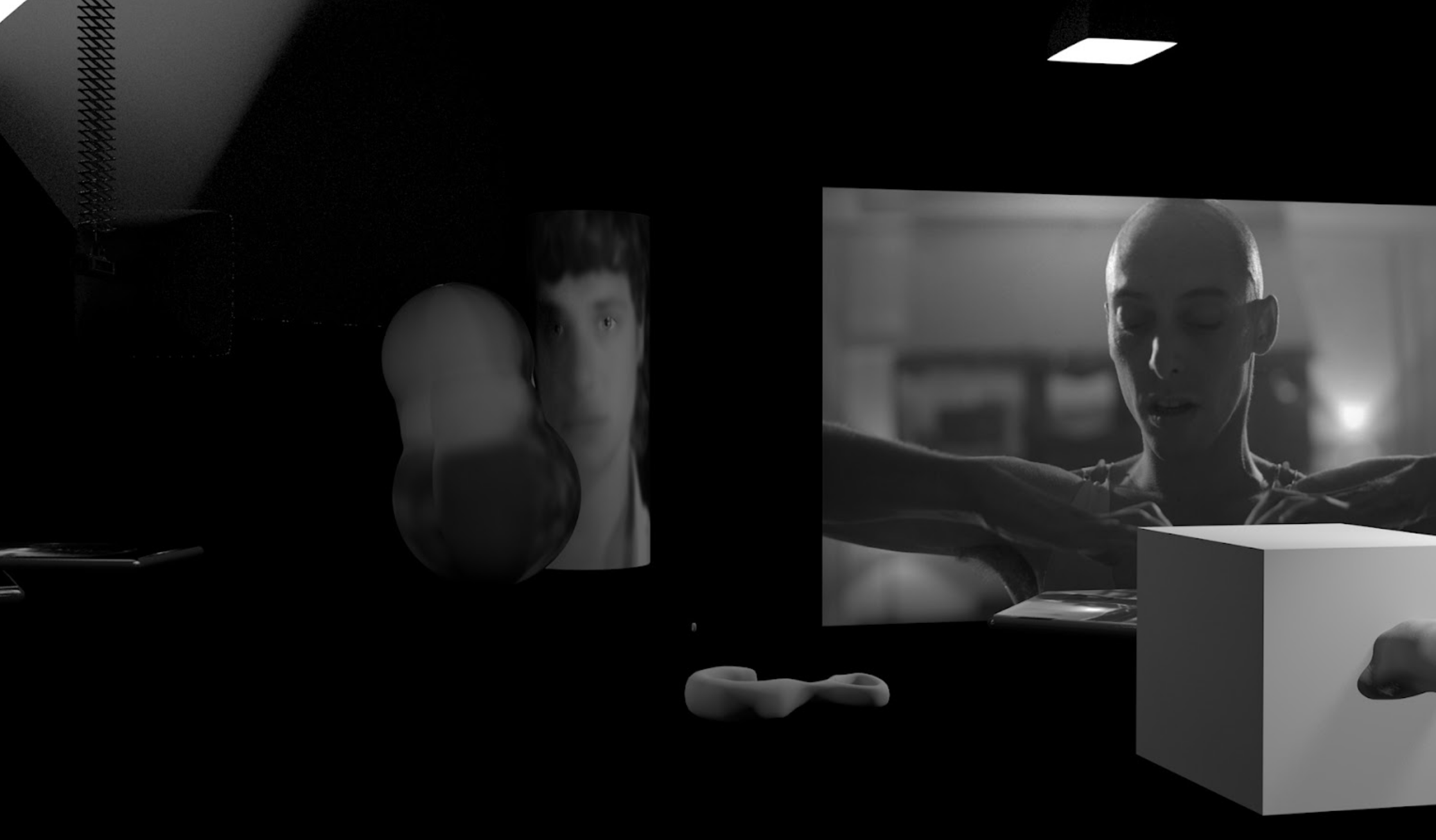
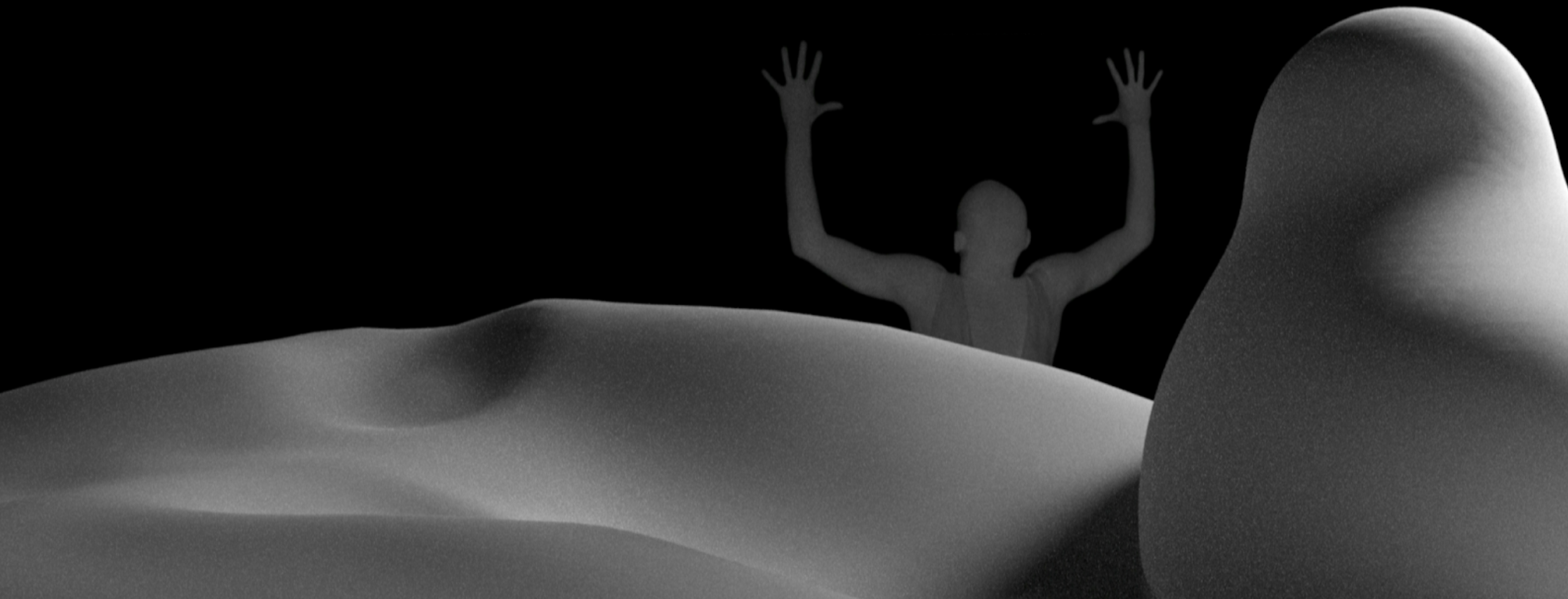
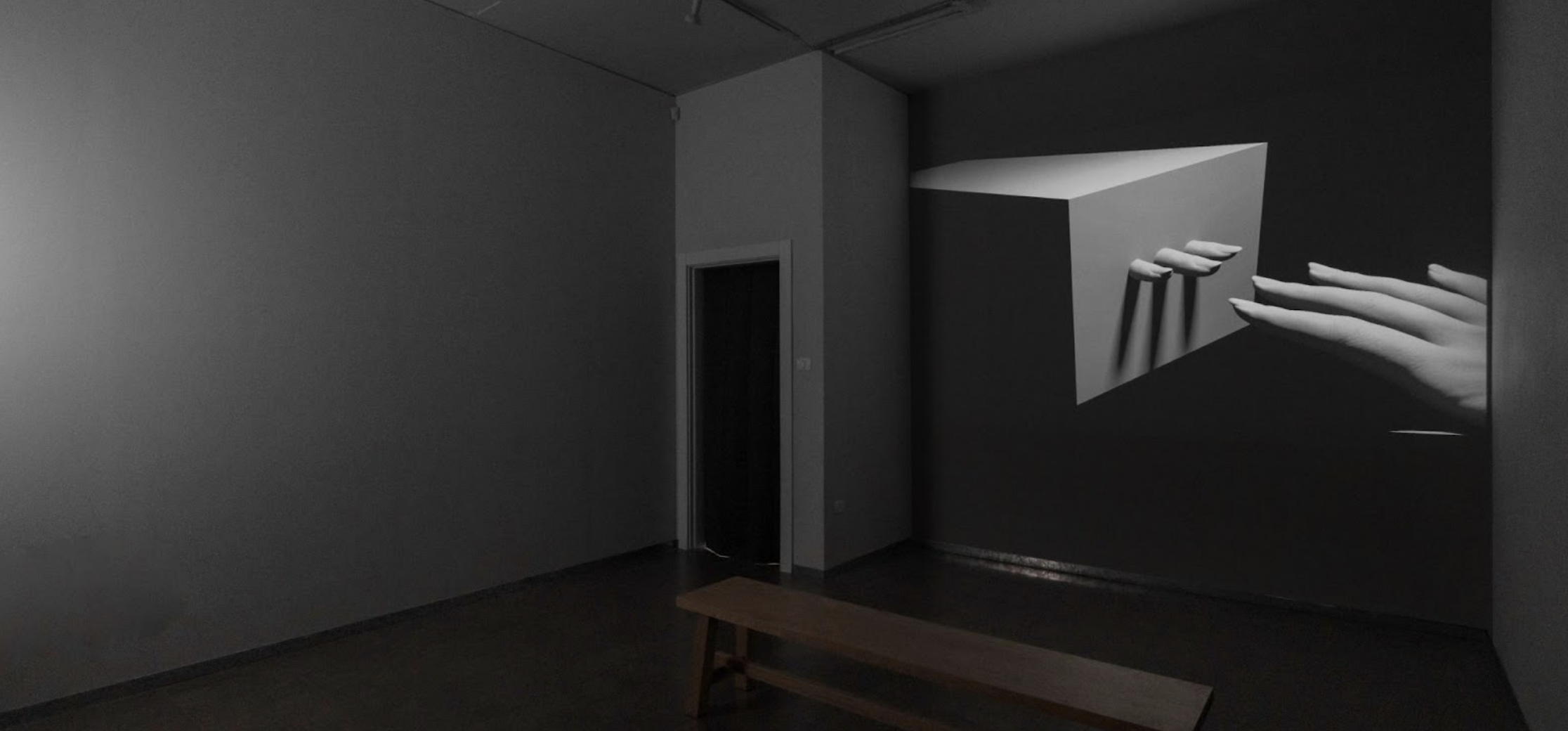
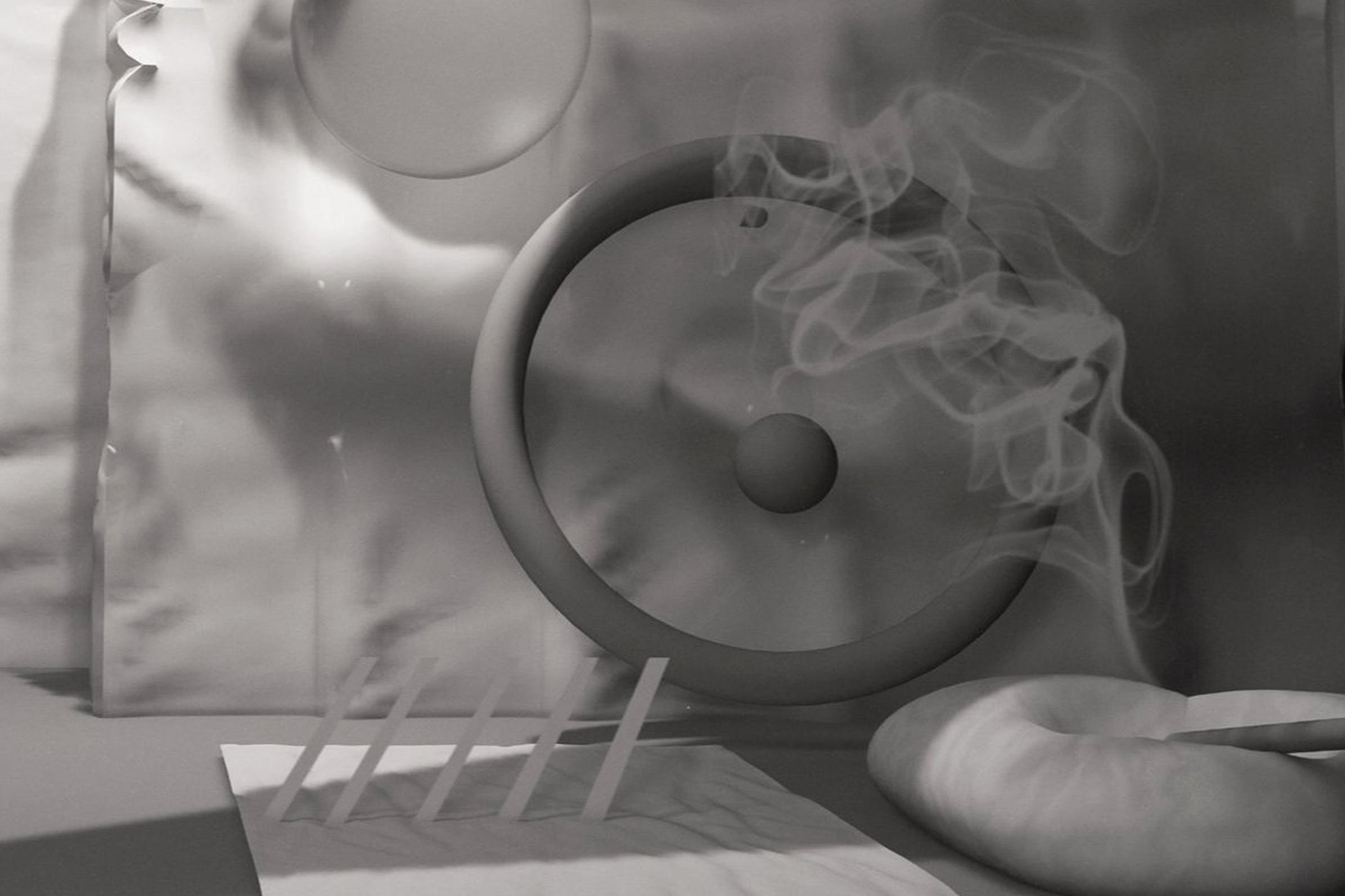
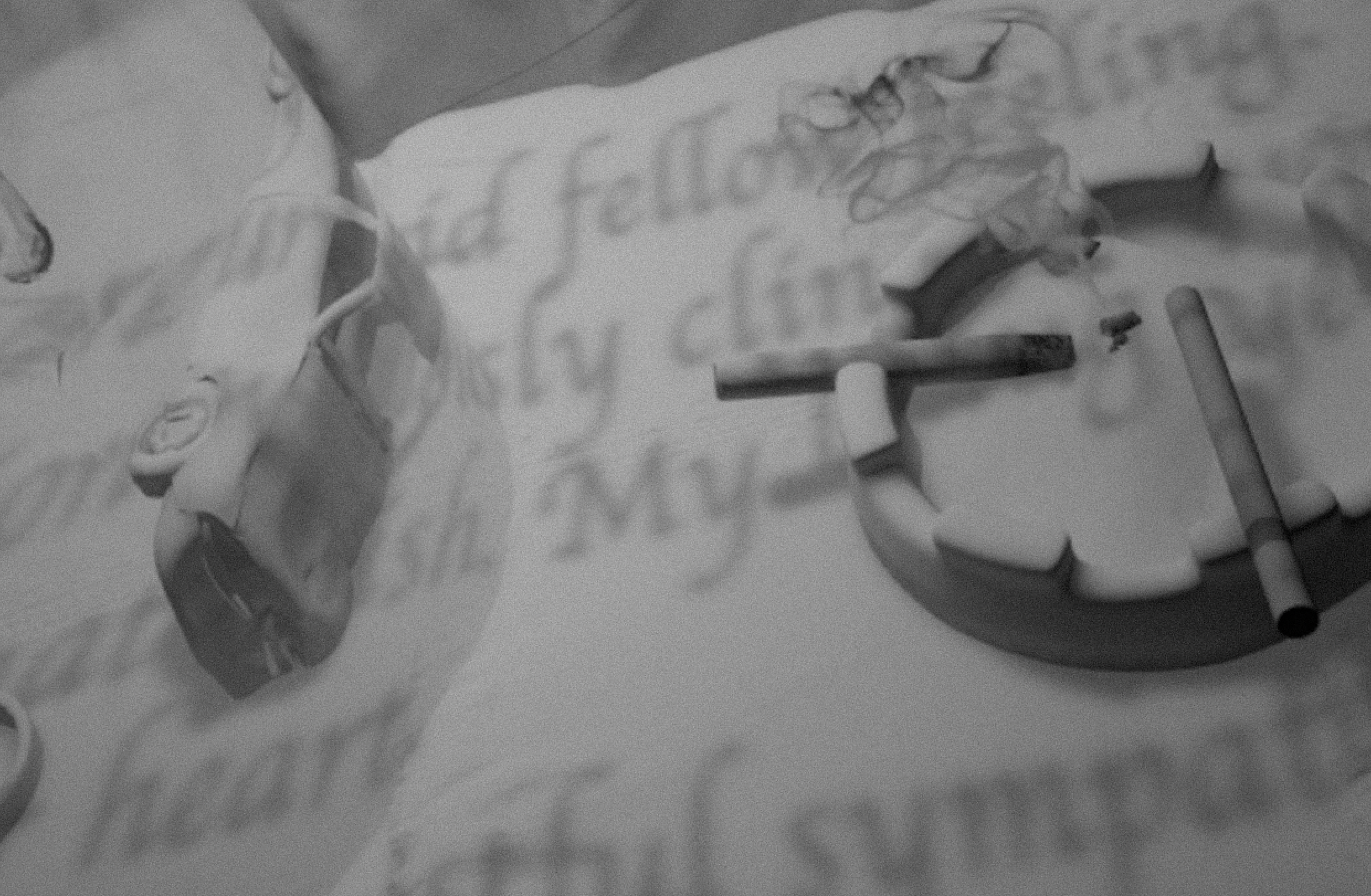
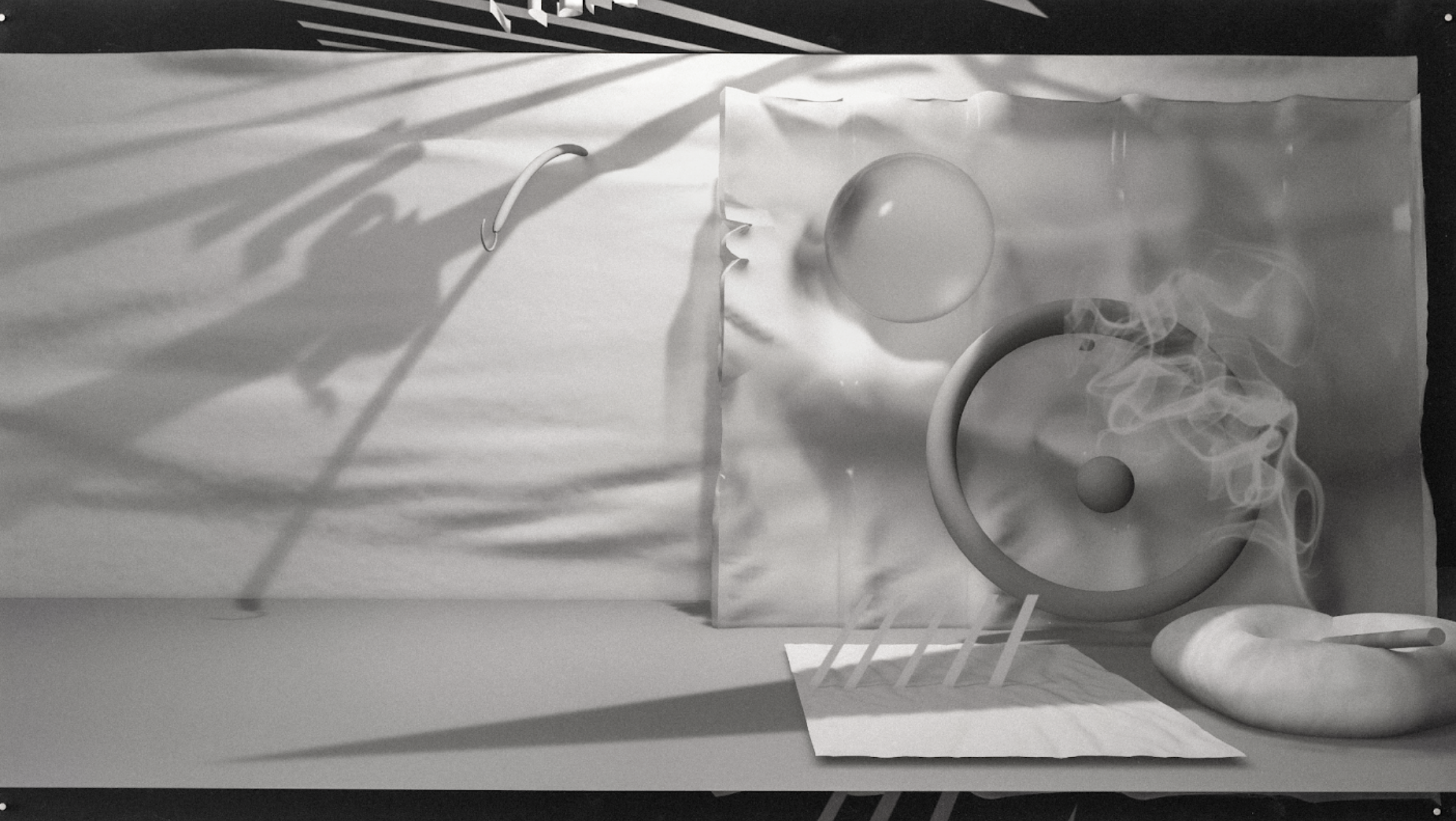
Video screenshots and Maya Gallery installation view
The Sounds of the Humpback Whales
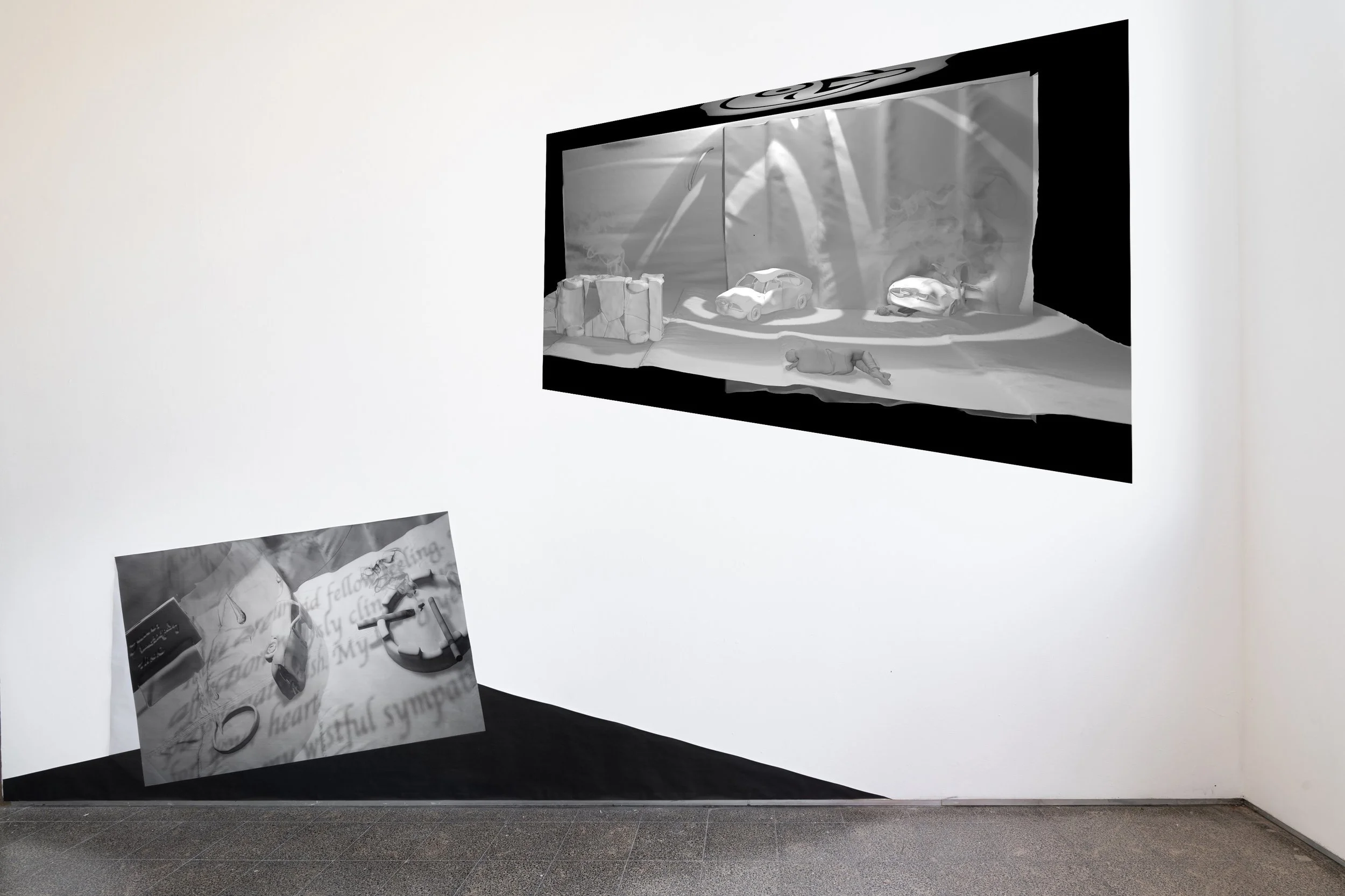
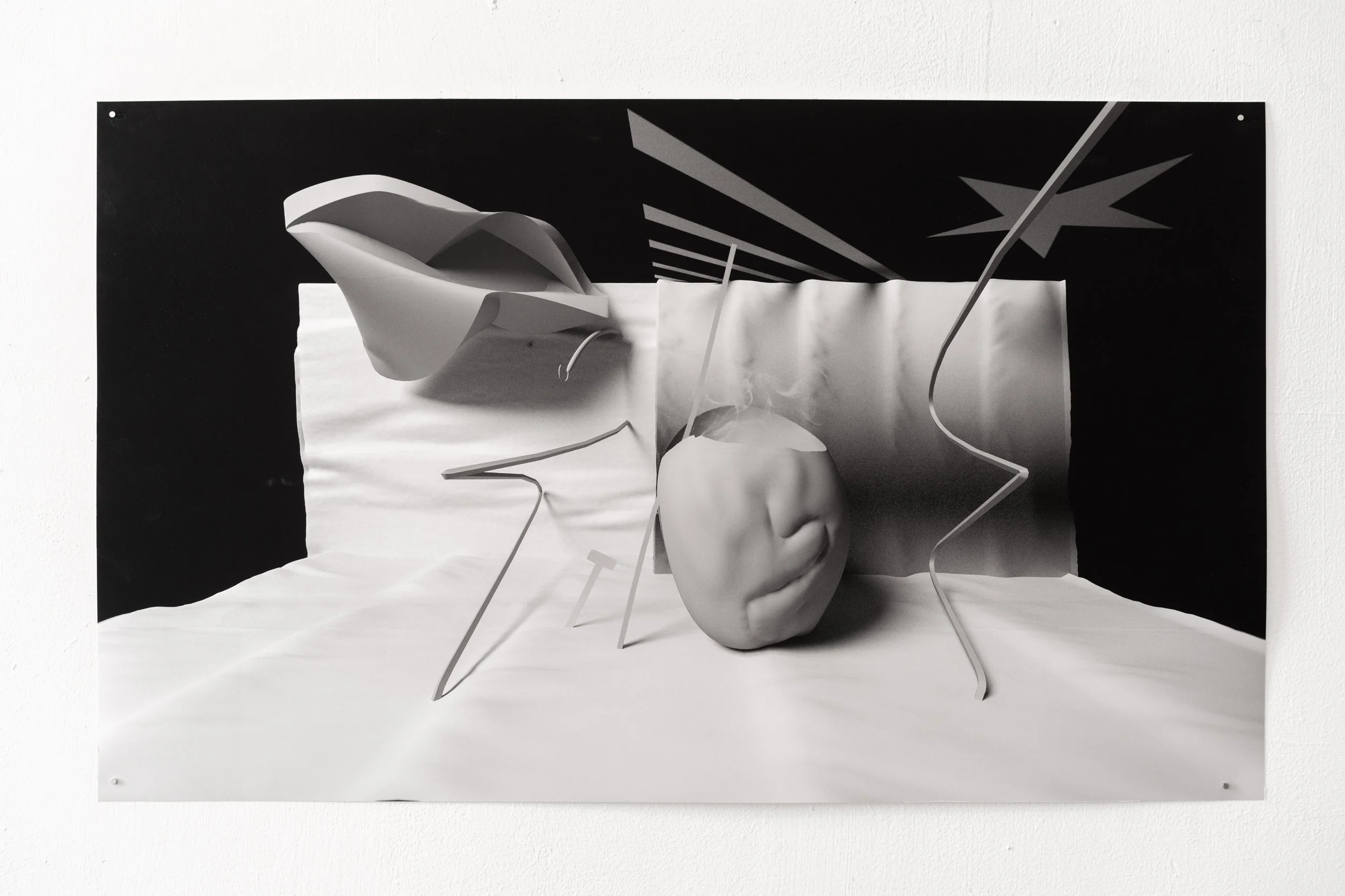
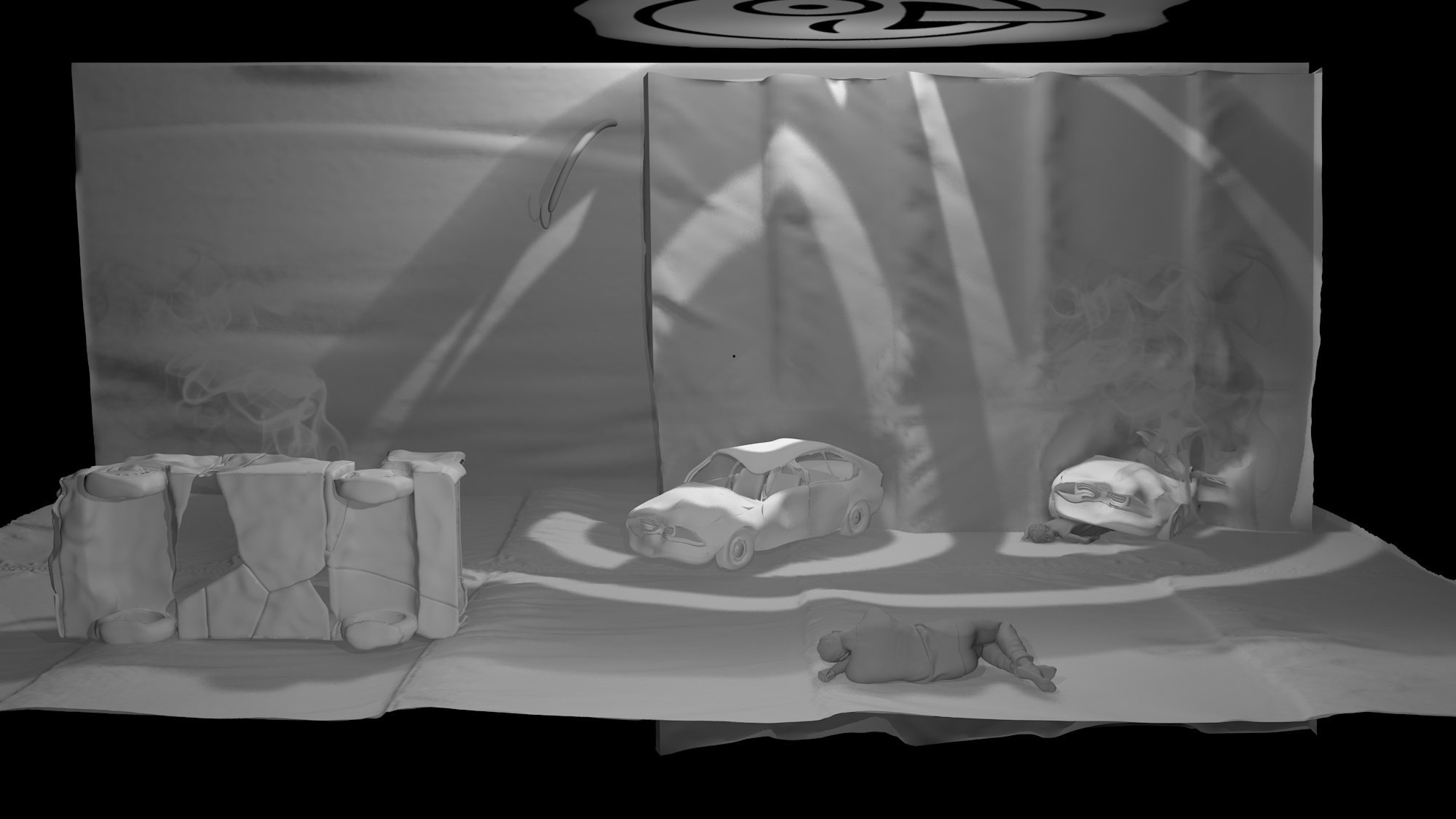
Maya Gallery // Tamar Katz Text by Meital Aviram
perspectives and ways of being. Layering time, this hybrid world of flesh and virtual matter holds within it new sculptural and conceptual hierarchies in the relationships between space and matter. Through the use of a rendering program, Katz creates frames that capture the movement of the software itself—the 21st-century machine—resulting in imagery impossible to capture in corporeal reality. This technology allows her to present subjects from an endless number of viewpoints while negating both the rules of linear perspective and the familiar laws of physics. Thus, the timeline is multiplied, presenting parallel potential happenings as simultaneous instances to be carried into future spaces.
Katz uses filmed footage and captured images as tactile material, defining three distinct textures in her world. The first is a lifeless matte, the default of the rendering program; the second is shiny and metallic, representing the beating machine or the disco ball; and the third is the filmed footage projected onto objects—a moving texture woven into the simulation as a second skin. The original score, composed by musician Tai Rona, is as if borrowed from a cinematic suspense sequence, promising a climax that we do not get to witness. With the progression of the work, the suspenseful score unravels and transforms into an apocalyptic soundscape for the end of the world—a sublime and transcendent presence. As the piece concludes, the score breaks apart, with notes seemingly instigated by floating winds in a desert-like nothingness.
The Rhythm of the Machine
Katz’s world is full of inventions. She creates a multi-purpose space whose chief purpose is unknown to us. In the background, we hear the sound of something not unlike a clock ticking. Mechanisms unfold like twirling skirts; a screen appears on which dancers are performing; a meticulously crafted 3D hand reaches out and makes contact with a projection, impacting the dancers’ movements as they are being woven. An inner light source highlights the differences between the film projection and the simulation, while images of dancers are plastered onto cones and matryoshka-like shapes, creating new viewing surfaces. Cogwheels break into shreds, disavowing their role as the beating heart of this inner world.
The vanishing point is unclear; there is no fixed place to hold our gaze. We witness a semi-erotic dance scene not intended for us, and frozen human dancers floating in space. Flesh and blood figures are etched onto the screen, and we, the voyeurs, find ourselves swaying to the inner rhythm of the machine—ticking the emancipation sounds of the reproduced body as it is divorced from the living form.
Meital Aviram
*
We live today under a new world order,
The web which weaves together all things envelops our bodies,
Baths our limbs,
In a halo of joy.
A state to which men of old acceded only through music,
Greets us each morning as a commonplace.
…
Now that the light which surrounds our bodies is palpable,
Now that we have come at last to our destination
Leaving behind a world of division,
The way of thinking which divided us,
Immersed in a serene, fertile delight
Of a new Law
Now,
For the first time,
We can retrace the end of the old order.
* Michel Houellebecq, Atomised, published by Vintage, London, 2001
The work The Sounds of the Humpback Whales, Side B serves as the second chapter in Tamar Katz’s two-part video project. The first installment, Side A, was exhibited in 2021 as part of the group show vi-vi-vi-video now, curated by Eitan Buganim at the New Gallery Artist Studios, Jerusalem. This second part is currently on view in Katz’s solo exhibition at Maya Gallery TLV, where the artist presents a new body of work comprised of video and digital prints produced over the past year. At the center of the exhibition stands a poetically dystopian video work, presenting three dancing figures caught in a limbo of rendered machinery, projections, and rudimentary shapes. In this video piece, which is divided into three chapters, Katz presents a choreography in which filmed bodies and imagined bodies are intertwined into sensual, metaversal hybrids. In a first for the artist, Katz presents a series of digital prints as an accompaniment to her video work. Acting as an exposition, these prints allow the audience an entry point into the slippery universe created inside the screening room.
The Entrance: Easy Things
At the entrance hallway of the gallery, four digital prints from the series Easy Things (2022) open the exhibition. The works are hung in a trompe l’oeil fashion, creating a virtual disturbance in the physical architectural space. Upon entering, visitors are met with a duo of works whose original rectangular shapes have been distorted to adhere to the perspective ruling over virtual space. Crash depicts the site of a car crash appearing to have occurred on a stage, evoking the theatrical starkness of Lars von Trier’s Dogville or the paintings of Michaël Borremans. Beside it, the work Paper Cut is positioned level with the floor of the gallery. This placement feels precarious and temporary, suggesting the possibilities of both change and movement. Within the cropped shot, a shadow is cast that forms letters, coming together to make up a sentimental phrase—something one might find in a lover's letter. The shadow falls upon an ashtray with still-lit cigarettes and a glass bell, capturing a moment in time that references the car accident.
On the opposing wall hang Unstable Objects and Heart Ash. These two works depict a meticulously crafted stage or set on which various objects are placed, representing different acts of the same play. The abstract sculptural objects divest us of the ability to gauge their scale, making it impossible to determine whether we are viewing a miniature model or a monumental sculptural court. Unstable Objects simulates a central public space where objects speak the language of modernist sculpture, designed by a higher authority rather than the individual. In contrast, Heart Ash presents an emotional personal landscape—an inner space in more ways than one, a hidden place taken from Katz’s private world.
The Screening Room: Side B
Continuing into the second room of the gallery, we encounter the video work The Sounds of the Humpback Whales, Side B. This work is a continuation of Katz’s artistic, cinematic, and sociological research practice, exploring questions regarding the construction of the subject, the body, and the dialectic between these and the spaces surrounding them. The imagined virtual space Katz creates offers the possibility of a spillage between the material world and the simulation. The 3D realism offered by the artist blurs the traditional framework of the video medium, as she breaks down the hierarchy between the figures and the objects depicted. Even as Katz works with simulations, she chooses to look at the world from an embodied, material, and sensual standpoint. This stems from a belief that the spirit of any historical period—the so-called "feel" of the times—is revealed in its purest form through the proper embodied viewing experience, at the meeting point between viewing technologies and human anatomy.
Parallel Realities and Technical Textures
The video work deals with the human body by dissolving it, only to rebirth it as potential—an open-ended equation with endless possibilities. The work creates a world of multiple