
info
/
Like Human Beings
The Adams Prize Exhibition, Shenkar Academy, Curator: Uriel Miron
Like Human Beings (2017)
single-channel video, digital HD format, 10:06 min
Terms and Conditions
The Margaret and Sylvan Adams Prize Exhibition for Graduates of the School of Multidisciplinary Art, Shenkar
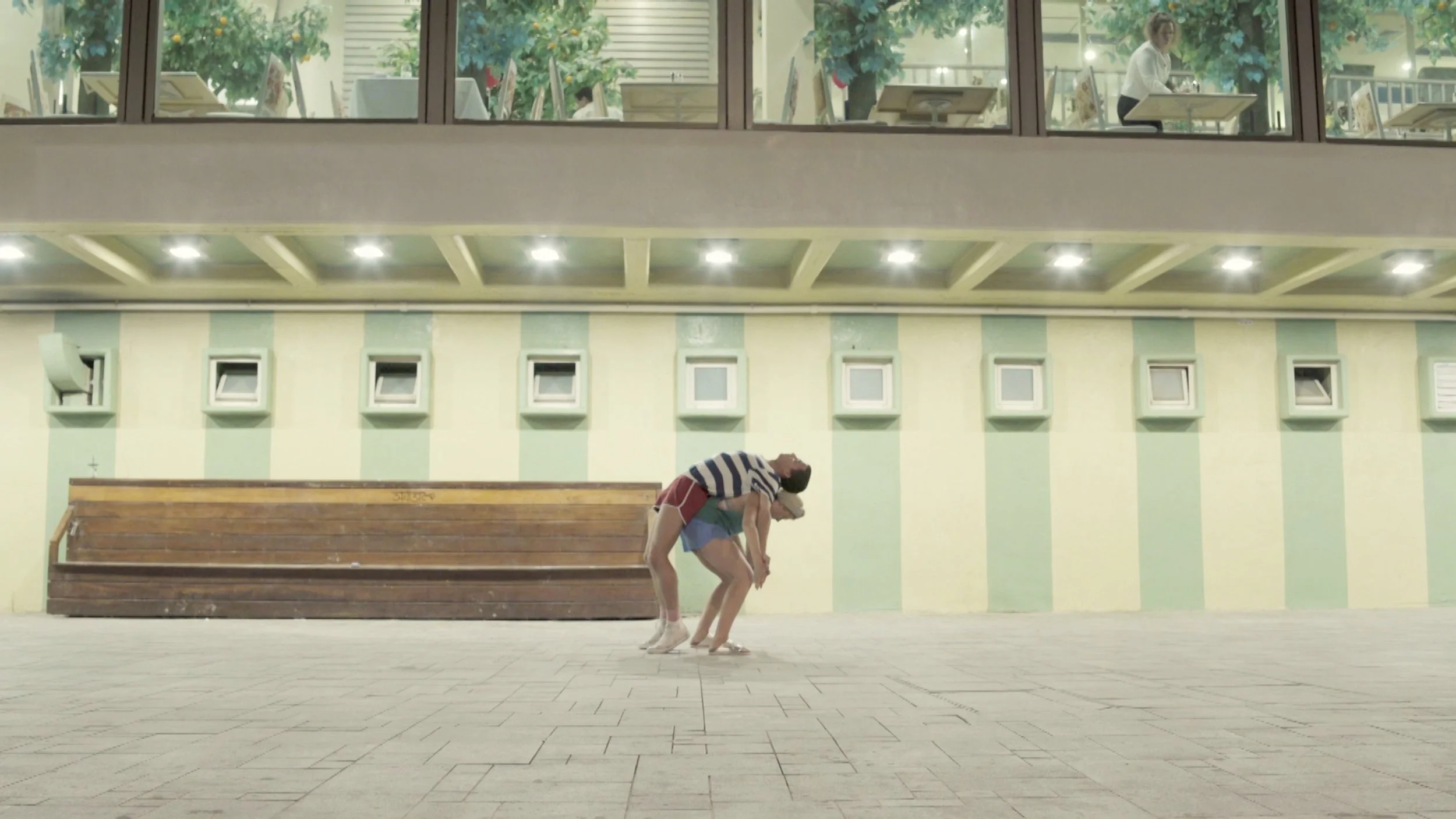
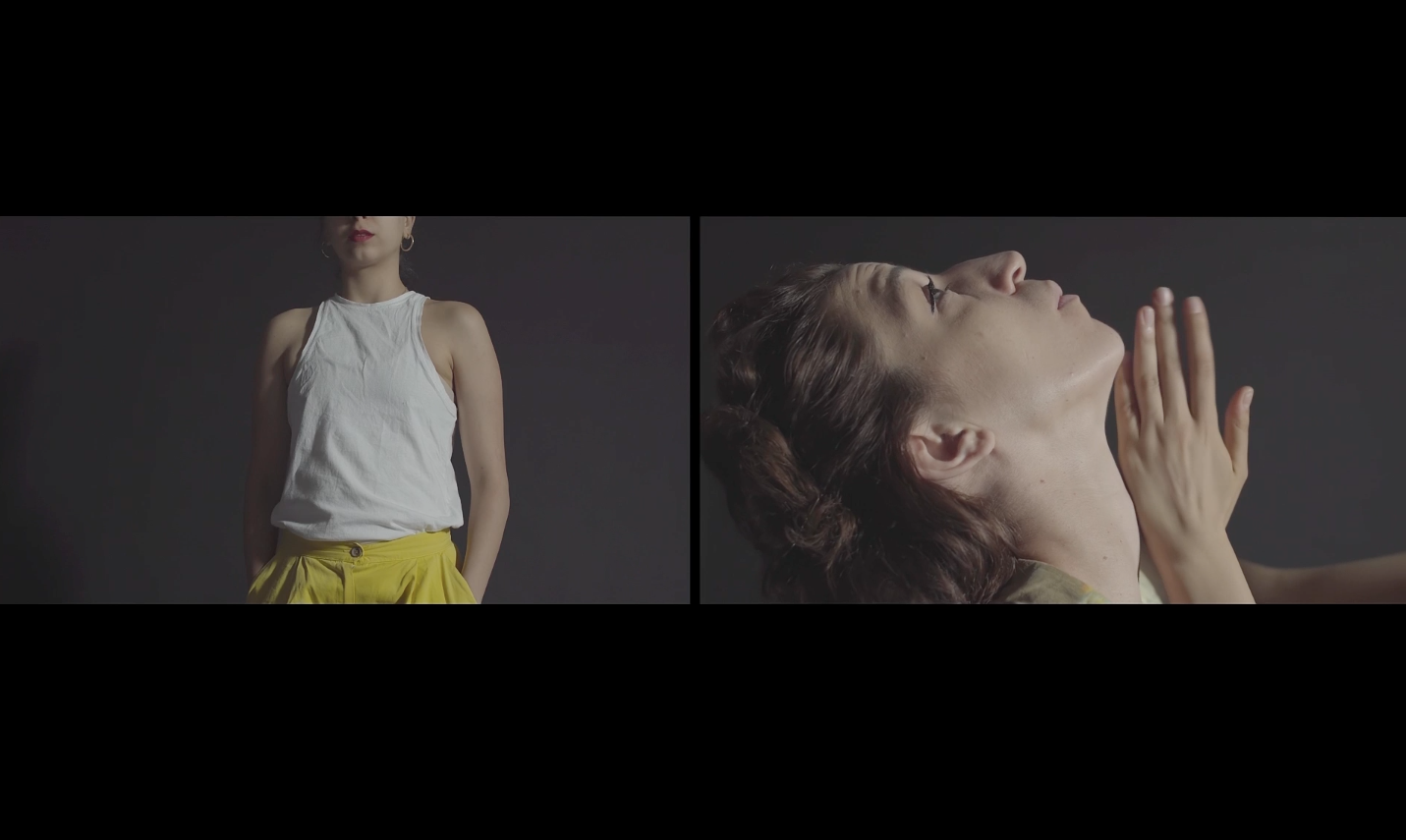
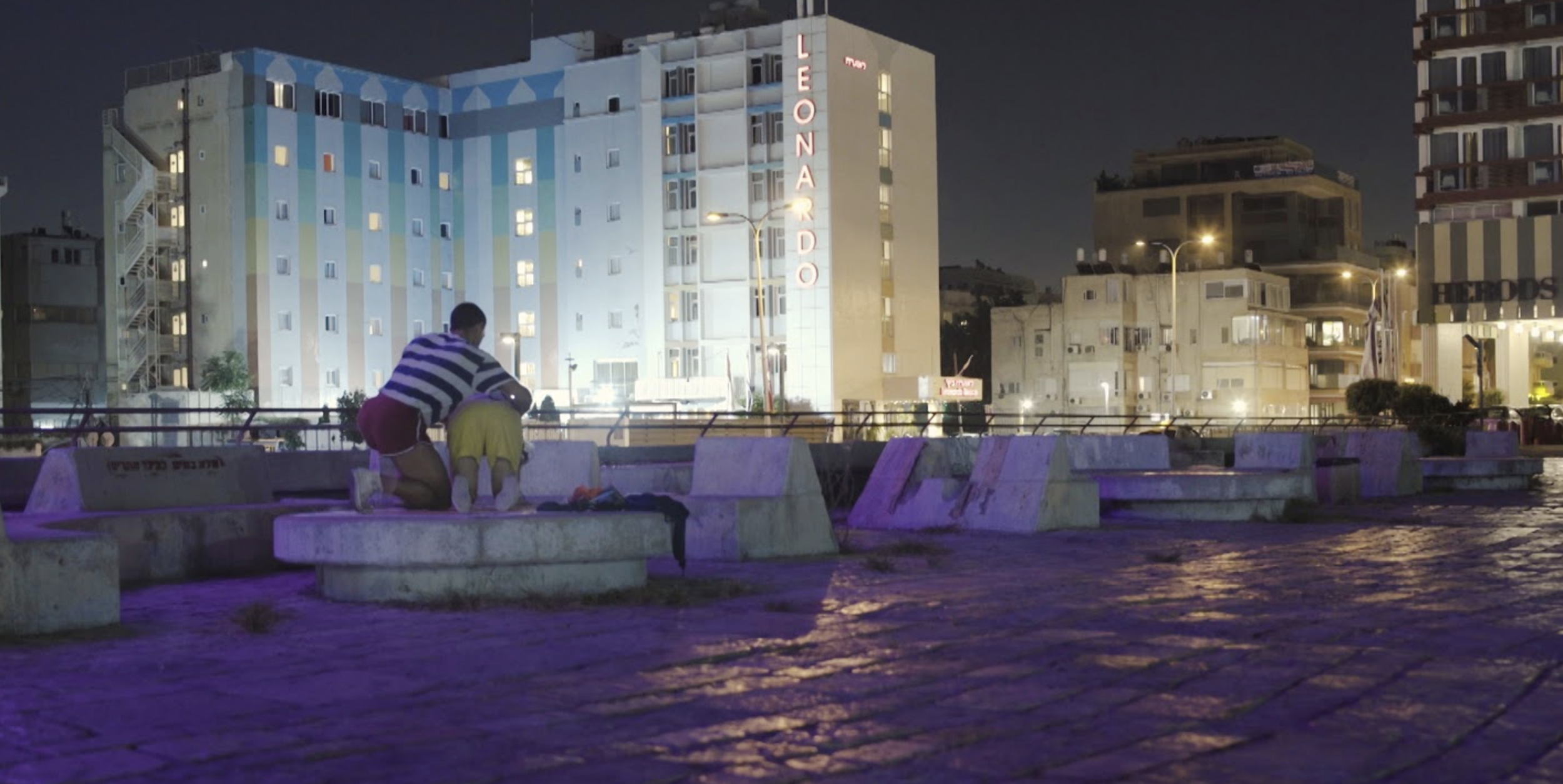
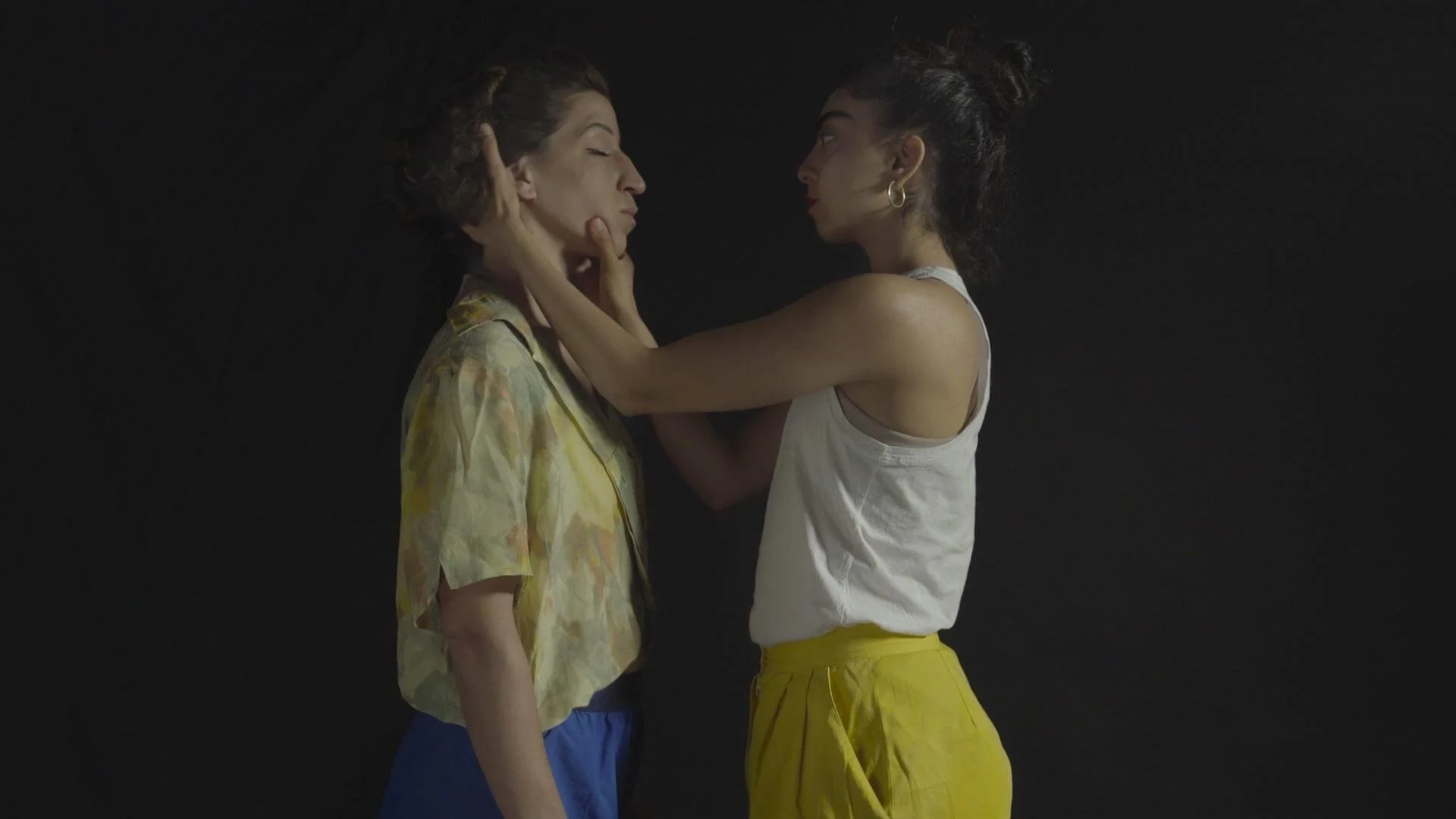
Tamar Katz works in the fields of performance, video, and participatory art. She presents a new video work, Like Humans, which takes as its starting point encounters between pairs involving physical searches. The work features a series of staged security checks between participants recruited via Facebook. These are brief, enigmatic inspections that begin with an approach but end in a frayed manner, devoid of verbal communication or narrative motive. The accompanying soundtrack presents a doctrine calling for the abandonment of indirect means of knowing and getting to know the "other" (including digital-networked means) in favor of establishing acquaintance based on the senses and immediate contact.
In Katz’s encounters, the everyday meeting—typically characterized by a wearying blend of bureaucratic alienation and forced intimacy—is transformed into a model for pre-linguistic communication: a connection between two people striving to know one another through primal, sensory, and sensual means of touch, smell, and sight. Katz’s consistent engagement with the conditions of intimacy between strangers, particularly in public spaces, reaches a pinnacle in this work.
The School of Multidisciplinary Art at Shenkar is proud to present an exhibition featuring four prominent graduates, winners of the Margaret and Sylvan Adams Prize. This year marks the inaugural awarding of the prize to alumni who have demonstrated impressive artistic development.
The works of the four winners—Tamar Katz, Guy Levy, Maayan Karaim, and Roni Karpiol—represent a diverse range of creative fields, practical and conceptual approaches, and modes of artistic expression. They were selected based on their individual quality and merit, rather than thematic or curatorial constraints. Nevertheless, during the development of the exhibition, the connections binding these four artists became clear, tracing intriguing relationships between the works on display.
The term "Terms and Conditions" arose during a conversation with the artists regarding the work of Roni Karpiol, referencing the conditions we are required to accept before almost any action in the digital sphere. These are long texts, couched in legal jargon, detailing the limitations and obligations imposed upon us when using a platform (an app, a website, a social network, etc.). They are texts that almost no one reads, despite the fact that they effectively define the terms of our relationships with the entities through which we "live" online.

The four artists in this exhibition engage with various aspects of legal systems and social conventions that define our relationships with others and our own identities—what we can know about others and what we are willing to reveal about ourselves. Like "Terms and Conditions," these systems of laws and conventions usually remain "silent," implied, or even repressed, by virtue of tacit consent and perhaps a reluctance to know (had we bothered to read the "Terms and Conditions" in full, perhaps we would not have signed them).